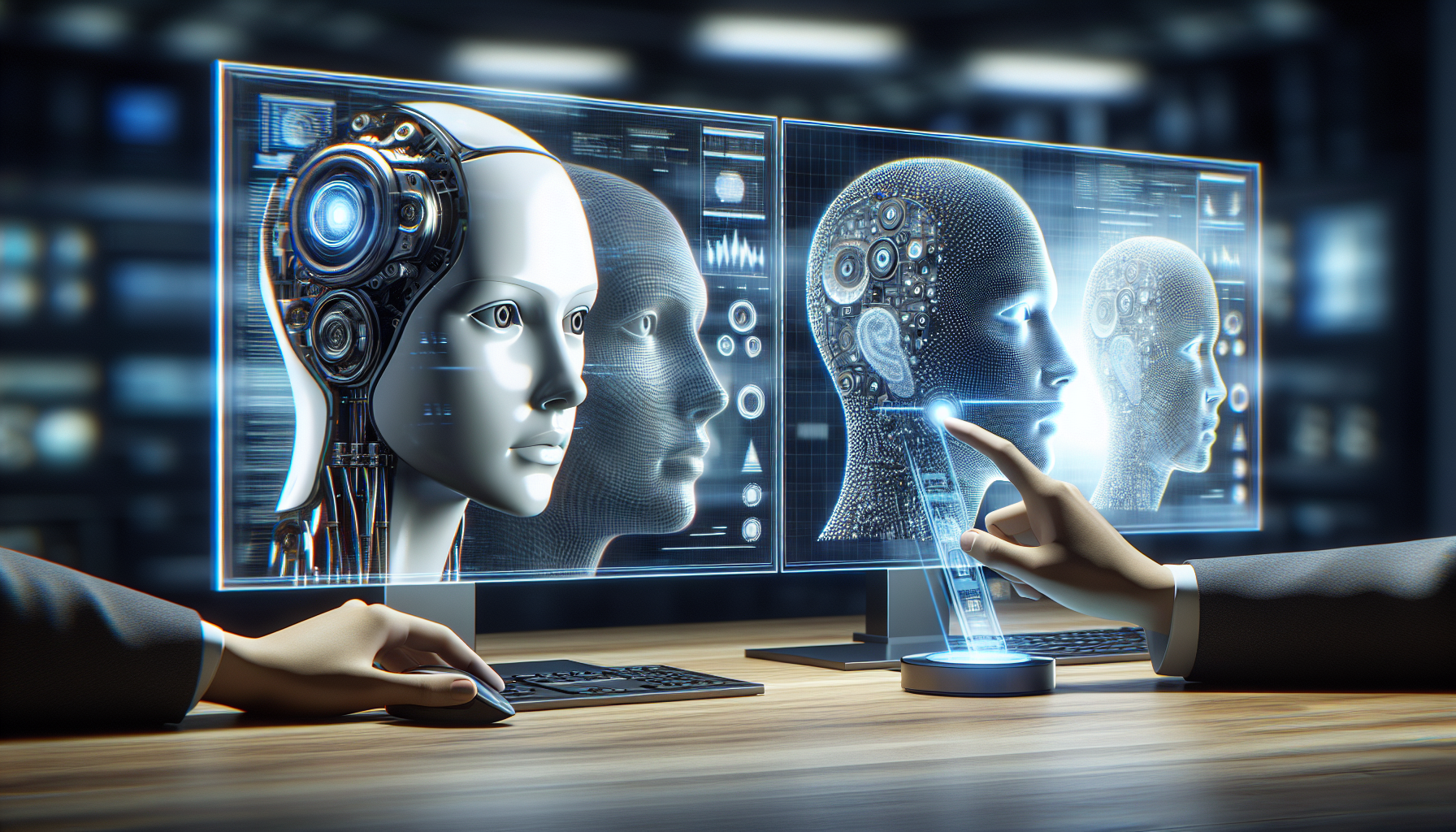
Reinforcement Learning: Unlocking AI's Potential Through Reward Systems
April 13, 2026
Imagine teaching a dog a new trick. You might offer it a treat each time it successfully rolls over, reinforcing the behavior you want to see. Now, take that concept and apply it to machines. That's the essence of reinforcement learning—an intriguing branch of artificial intelligence that’s turning heads in the tech world. But what makes it so compelling, and how does it stack up against other forms of AI learning?
Reinforcement learning (RL) is essentially about teaching machines to make decisions by rewarding them for desirable outcomes. Think of it as a sophisticated carrot-and-stick approach, where the AI learns from the consequences of its actions, much like a human does. Unlike supervised learning, where a machine is trained on a labeled dataset, or unsupervised learning, which involves finding patterns in unlabeled data, RL stands out for its dynamic approach to problem-solving.
One of the most fascinating aspects of reinforcement learning is its ability to adapt and improve over time. Consider how RL algorithms have excelled in complex environments like games. DeepMind’s AlphaGo, for example, famously defeated a world champion in the game of Go—a feat once thought to be decades away. What’s behind such success? It's the ability of RL systems to explore a vast array of strategies, learning from both victories and defeats to enhance their performance continuously.
But let's not gloss over the challenges. Reinforcement learning isn't a silver bullet. It requires a carefully crafted environment where the AI can interact and receive feedback. Designing such an environment can be resource-intensive, and there's always the risk of the AI developing unintended behaviors if the reward system isn't meticulously planned. Imagine rewarding a robot for picking up trash, only to find it later creating trash just to earn more rewards by cleaning it up.
When we compare reinforcement learning to other AI methodologies, its strength lies in handling situations where the path to a solution isn't obvious. In contrast, supervised learning shines in contexts where there’s a wealth of labeled data, like image recognition or fraud detection. Unsupervised learning, on the other hand, is adept at uncovering hidden patterns and structures within data, making it ideal for market segmentation or anomaly detection.
Despite these distinctions, the lines between these AI learning strategies often blur. For instance, deep reinforcement learning combines neural networks—often used in supervised learning—with the reward-based system of RL, paving the way for breakthroughs in areas such as autonomous driving and robotic manipulation. This hybrid approach leverages the predictive power of neural networks to enhance the decision-making capabilities of RL, creating systems that are both adaptive and perceptive.
Yet, the journey of reinforcement learning is far from over. As researchers continue to refine these systems, they're exploring ways to make them more robust and less dependent on trial and error. One intriguing avenue is incorporating elements of human learning. Imagine an AI that can leverage prior experiences or knowledge, much like a human might transfer skills from one task to another. This could significantly accelerate the learning process, making AI more efficient and adaptable.
Moreover, as AI becomes more integrated into everyday life, the ethical implications of reinforcement learning are coming to the fore. How do we ensure that an AI prioritizes human values and safety over mere task completion? It's a question that invites not just technical solutions but also philosophical and societal considerations.
So, where does this leave us? Reinforcement learning is undoubtedly a powerful tool in the AI arsenal, capable of tackling complex, dynamic problems in ways that closely mimic human learning. But as with any technology, its true potential will be realized not just through technological advances but also through thoughtful reflection on its broader impact.
As we stand on the brink of increasingly intelligent machines, perhaps the most provocative question isn't what AI will learn next, but how we, as creators and users, will choose to guide that learning. What values will we instill in our artificial counterparts, and how will they reflect the diverse tapestry of human experience? Only time will tell, but one thing is certain: the conversation around reinforcement learning is just getting started.